
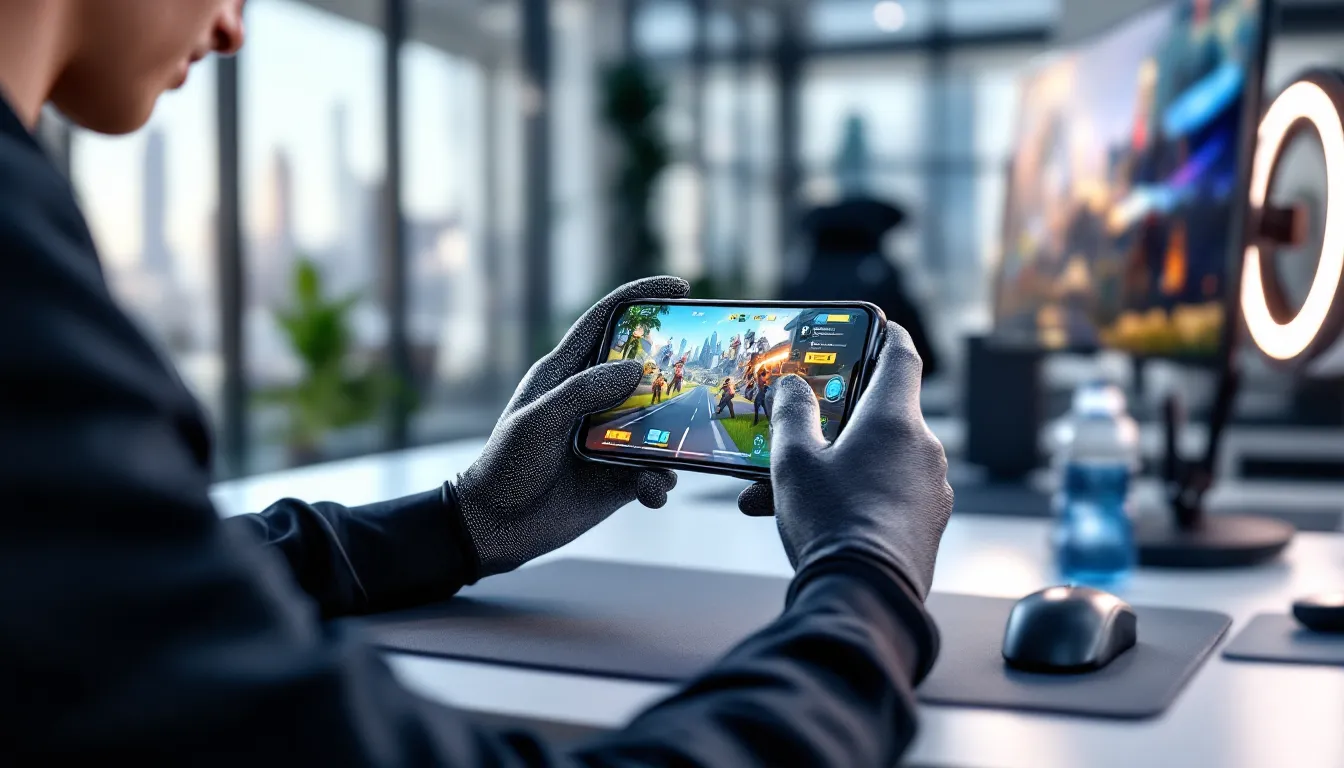

If you’ve ever watched a high-level PUBG Mobile or Call of Duty Mobile tournament, you might’ve noticed something unusual: players wearing what looks like compression gear on their fingers or arms. That’s not just for show. Gaming sleeves have become essential gear for serious mobile gamers, and for good reason, they can mean the difference between a 200ms response time and a 150ms one, or between a clean four-finger claw swipe and a sweaty fumble that costs you the match.
Mobile gaming has evolved far beyond casual time-killers. With prize pools hitting seven figures and mobile esports pulling in millions of viewers, the gear you use matters as much as your map knowledge or aim training. Gaming sleeves address one of mobile gaming’s biggest physical challenges: maintaining consistent touchscreen contact when your hands are sweating, when friction builds up during marathon sessions, or when humidity turns your screen into a resistance magnet.
This guide breaks down everything you need to know about gaming sleeves in 2026, what they actually do, how to pick the right one for your game and playstyle, and whether they’re worth the investment. Whether you’re grinding ranked in Mobile Legends or trying to crack into competitive Call of Duty Mobile, here’s what you need to know.
Key Takeaways
- Gaming sleeves reduce friction by 40-60% compared to bare skin, leading to faster swipes, smoother aim control, and measurable input improvements in competitive mobile games like PUBG Mobile and Call of Duty Mobile.
- Quality gaming sleeves use specialized materials like silver fiber (15-20% concentration), nylon microfiber, or graphene composites to maintain consistent touchscreen glide while wicking sweat away during extended ranked play sessions.
- Proper fit is critical—gaming sleeves should sit snug without restricting circulation, with seams positioned on the side of your finger to avoid friction inconsistencies during gameplay.
- Silver fiber sleeves ($15-35) offer the best balance of durability and performance for serious players, lasting 60+ washes compared to budget nylon options that typically last 20-30 washes.
- Pro mobile gamers adopt gaming sleeves at rates exceeding 80% in competitive regions, with adoption driven by measurable gains in multi-touch consistency and reduced input lag during high-pressure ranked matches.
- Sleeve maintenance—washing after every 2-3 gaming sessions, air-drying only, and replacing when fraying occurs—ensures consistent performance and prevents performance degradation over time.
What Is a Gaming Sleeve?
A gaming sleeve is a specialized accessory designed to reduce friction between your fingers or arm and your mobile device’s touchscreen. Most commonly, they’re worn on the thumbs and index fingers (finger sleeves) or cover a larger portion of the arm (full-arm sleeves) to create a smooth, low-resistance surface that glides across glass displays.
Unlike the compression sleeves athletes wear for circulation or recovery, gaming sleeves prioritize surface texture and material science over compression. The goal isn’t muscle support, it’s eliminating the micro-stutters and drag that happen when skin makes direct contact with glass, especially during high-speed swipes, drags, or multi-touch inputs common in shooters and MOBAs.
How Gaming Sleeves Differ from Regular Arm Sleeves
Regular athletic compression sleeves are built with elastane and cotton blends designed for muscle stabilization and sweat absorption. Gaming sleeves flip that script entirely.
First, material composition is different. Gaming sleeves use ultra-fine synthetic fibers, typically nylon blends, silver fiber composites, or even graphene-infused fabrics, that create a near-frictionless contact point with capacitive touchscreens. Where a cotton sleeve would absorb moisture and increase drag, a gaming sleeve actively repels sweat and maintains consistent glide characteristics.
Second, thickness matters. Gaming sleeves are deliberately thin, often under 0.5mm, to preserve touchscreen sensitivity. Capacitive screens detect the electrical charge from your fingertip, and even a slightly thick fabric can dampen that signal. Athletic sleeves don’t account for this: gaming sleeves are engineered around it.
Third, the fit philosophy differs. Compression sleeves are snug to support muscles. Gaming sleeves are snug to prevent bunching and wrinkling, which would create inconsistent friction zones. A good gaming sleeve feels like a second skin, not a bandage.
The Technology Behind Gaming Sleeves
Most gaming sleeves in 2026 use one of three core material technologies:
Silver fiber weaves are the most common. Silver has natural antibacterial properties (reducing odor during long sessions) and excellent electrical conductivity, which means it doesn’t interfere with capacitive touch recognition. High-end sleeves blend silver-coated nylon threads at 15-20% concentration for optimal performance without sacrificing durability.
Nylon microfiber blends are the budget-friendly standard. These use ultra-fine denier counts (often 40D or lower) to create a smooth surface texture. The trade-off is durability, cheaper nylon sleeves tend to pill or fray after 30-50 washes, while silver fiber versions last significantly longer.
Graphene-enhanced fabrics started appearing in premium sleeves in late 2025. Graphene offers extreme thinness, superior heat dissipation, and nearly zero friction coefficients. They’re overkill for most players but have gained traction among pro-level mobile esports athletes who notice the marginal gains. Expect to pay 3-4x the price of standard sleeves for graphene options.
The surface treatment also matters. Many sleeves undergo a hydrophobic coating process that causes moisture to bead and roll off rather than soak in. This keeps performance consistent even when your hands start sweating during clutch moments in ranked play.
Why Mobile Gamers Need Gaming Sleeves
Gaming sleeves aren’t just accessories, they solve real, measurable problems that affect gameplay performance. Here’s why they’ve become standard gear for competitive mobile players.
Improved Touchscreen Responsiveness and Precision
Skin has natural oils, moisture, and microscopic texture variations that create friction against glass. That friction translates to input lag, not the network kind, but physical resistance that slows down your swipe speed and reduces precision.
In fast-paced shooters like Call of Duty Mobile or Free Fire, where you’re constantly adjusting aim, sliding, jumping, and executing four-finger claw techniques, every millisecond counts. A gaming sleeve reduces the coefficient of friction by roughly 40-60% compared to bare skin, according to third-party testing from gear assessment sites that measure touchscreen response times.
That translates to faster 180-degree flicks, smoother drag-scoping, and more consistent recoil control patterns. If you’ve ever felt like your aim “sticks” mid-swipe during a firefight, friction is usually the culprit.
Reduced Sweat and Friction for Smoother Gameplay
Sweat is the enemy of mobile gaming performance. Even light perspiration increases surface tension between your finger and the screen, causing stutters, dead zones, or unregistered inputs. In MOBAs like Mobile Legends or Arena of Valor, missing a skill shot because your finger caught on the screen during a team fight can cost you the game.
Gaming sleeves wick moisture away from the contact point and maintain consistent glide even when your hands are drenched. The hydrophobic coatings used in quality sleeves cause sweat to roll off rather than pool, which keeps your inputs smooth from the first match to the fifth consecutive ranked game.
This is especially critical in humid environments or during summer months when room temperatures spike. Players in Southeast Asia, where mobile esports is massive and humidity is brutal, have adopted sleeves at rates exceeding 70% among competitive players.
Competitive Advantages in Esports and Ranked Play
In mobile esports, marginal gains stack. Pro players obsess over refresh rates, touch sampling rates, and latency because a 10ms advantage across a thousand inputs can swing a tournament.
Gaming sleeves offer two competitive edges. First, they normalize performance variability. Whether you’re fresh into a session or three hours deep, the sleeve maintains consistent friction levels. Bare-finger play degrades as skin moisture and temperature fluctuate.
Second, they enable more complex control schemes. Four-finger and six-finger claw layouts require rapid, precise multi-touch inputs across different screen zones. Many professional players from top-tier gaming setups report that sleeves make advanced techniques like gyroscope-assisted claw or hybrid layouts more reliable under tournament pressure. When you’re executing frame-perfect slide-jumps or crouch-peeking while aiming, the reduction in drag makes those inputs more consistent.
Types of Gaming Sleeves Available
Not all gaming sleeves are built the same. The type you choose depends on your game genre, control scheme, and personal preference.
Finger Sleeves vs. Full Arm Sleeves
Finger sleeves are the most popular option in 2026, especially for mobile shooters and battle royales. These are small, tube-like covers that slide onto your thumbs and index fingers (or additional fingers if you use claw layouts). They’re lightweight, portable, and target the exact contact points that matter most.
The advantages: minimal material means maximum breathability, they don’t interfere with arm movement, and they’re dirt cheap (often $5-15 for a multi-pack). The downside is they can slip off mid-game if the fit isn’t perfect, and they only cover the fingertips, if you rest your palms on the screen or use a tablet, they won’t help.
Full arm sleeves extend from the wrist to the elbow or even the bicep. These are less common but preferred by tablet gamers or players who rest their forearms on the device for stability during long sessions. Full sleeves prevent forearm sweat from dripping onto the screen and provide consistent glide if you use palm or forearm contact in your grip style.
The trade-off: they’re bulkier, warmer, and can feel restrictive if you’re not used to wearing arm compression gear. They’re overkill for phone-based gaming but make sense for large-format devices or if you’re streaming for hours and want comfort alongside performance.
Material Options: Nylon, Silver Fiber, and Hybrid Blends
Nylon microfiber sleeves are the entry-level standard. They’re affordable, widely available, and effective for casual to mid-level competitive play. Expect to pay $8-20 for a quality set. The main limitation is durability, nylon pills and loses its smooth texture after repeated washing, so budget for replacements every 2-3 months if you game daily.
Silver fiber sleeves are the sweet spot for serious players. The antibacterial properties keep them fresher longer, and the conductive fibers ensure zero interference with touch sensitivity. Prices range from $15-35 depending on the silver content percentage. Look for sleeves with at least 15% silver fiber content: anything lower is mostly marketing.
Hybrid blends combine nylon, spandex, and silver fiber in varying ratios to balance cost, durability, and performance. Some 2026 models include graphene thread integration or carbon fiber accents for enhanced heat dissipation. These premium options run $30-60 but can last 6+ months with proper care.
Material choice also affects washability and odor resistance. Silver fiber naturally inhibits bacterial growth, meaning less frequent washing. Pure nylon needs washing after every 2-3 sessions to avoid funk buildup.
Specialized Sleeves for Different Game Genres
Some manufacturers now make genre-specific sleeves optimized for different input patterns.
Shooter sleeves (for PUBG Mobile, COD Mobile, Free Fire) prioritize ultra-low friction and thinner materials for fast swipes and flicks. Many feature reinforced fingertip zones where wear is highest.
MOBA sleeves (for Mobile Legends, Wild Rift, Arena of Valor) often use slightly thicker materials with better grip texture, since MOBA inputs involve more tapping and holding than swiping. Precision matters more than speed.
Racing and rhythm game sleeves sometimes include textured grip zones on the thumb pad for better control during sustained holds or rapid tapping sequences.
Are these specializations necessary? Not really. A good all-purpose silver fiber sleeve works fine across genres. But if you’re hyper-focused on one game and want every possible edge, specialized options exist.
How to Choose the Right Gaming Sleeve
Picking the right gaming sleeve comes down to three core factors: fit, breathability, and durability.
Sizing and Fit Considerations
Gaming sleeves typically come in S, M, L, and XL sizes, but sizing standards vary wildly between brands. Most manufacturers base sizing on finger circumference or arm circumference at the widest point.
For finger sleeves, measure the circumference of your finger at the widest point (usually the knuckle). Most size charts look something like this:
- S: 40-50mm circumference
- M: 50-60mm circumference
- L: 60-70mm circumference
- XL: 70-80mm circumference
If you’re between sizes, go smaller. A slightly snug sleeve stays in place and prevents bunching: a loose sleeve will slide around mid-game and completely defeat the purpose. That said, don’t go so tight that it restricts blood flow or feels uncomfortable after 10 minutes.
For full arm sleeves, measure your forearm circumference at the widest point. Most brands use measurements in the 20-35cm range across their size runs.
One trick: if a brand offers variety packs with multiple sizes, grab one. You might find that your thumb needs a medium but your index finger fits better in a large, especially if you have asymmetric hand proportions.
Breathability and Moisture-Wicking Features
Breathability determines how quickly heat and moisture escape. Poor breathability means your fingers get clammy, sweat pools inside the sleeve, and you’re worse off than going bare-skin.
Look for sleeves with mesh ventilation zones or moisture-wicking fiber blends. Silver fiber naturally wicks moisture better than pure nylon. Some premium sleeves incorporate micro-perforations or honeycomb weave patterns that increase airflow without sacrificing durability.
If you game in an air-conditioned environment, breathability is less critical. If you’re in a warm room or live in a humid climate, prioritize sleeves with active moisture management. Reviews from tech gear evaluators often include breathability testing that simulates extended gaming sessions under controlled humidity.
Another factor: interior texture. Some sleeves have a brushed or velour-like interior that feels soft but traps heat. Others use a smooth, almost slippery interior lining that promotes airflow. For maximum comfort during 3+ hour sessions, smooth interiors win.
Durability and Washing Requirements
Durability varies dramatically. Budget nylon sleeves might last 20-30 washes before they start pilling, fraying, or losing elasticity. Silver fiber and hybrid blends typically hold up for 60-100 washes.
Key durability indicators:
- Double-stitched seams prevent unraveling at stress points
- Reinforced fingertip zones resist abrasion from constant screen contact
- Elastic retention bands at the base prevent slipping without cutting off circulation
Washing requirements also matter. Most gaming sleeves are machine-washable on delicate/cold cycles, but check the care label. Some silver fiber sleeves require hand-washing to preserve the conductive coating. Avoid fabric softener, it leaves residue that increases friction and defeats the entire purpose of the sleeve.
If you game daily, buy at least two sets so you can rotate while washing. A sleeve worn multiple sessions without washing will accumulate oils and dead skin, which ironically increases friction over time.
Top Gaming Sleeves Reviewed for 2026
Here’s a breakdown of the best gaming sleeves across different price tiers and use cases, based on performance testing, user reviews, and pro player adoption.
Best Budget-Friendly Options
SYOSIN Finger Sleeves (10-pack, nylon blend) – $10-12
These are the standard-bearer for entry-level sleeves. Ultra-thin nylon construction, decent moisture wicking, and they come in mixed sizes so you can find the right fit. Durability is average (expect 25-30 washes), but at this price point, they’re practically disposable. Great for casual players or anyone testing whether sleeves make a difference before investing more.
JTENG Gaming Finger Sleeves (8-pack, microfiber) – $8-10
Slightly thicker than SYOSIN but with better elasticity, which means they stay put during aggressive claw inputs. The trade-off is slightly more noticeable material between your finger and screen. Still, for under $10, these are solid for MOBA players who prioritize grip over ultra-low friction.
Newseego Touch Screen Finger Sleeves (12-pack, nylon) – $9-11
These skew thinner and smoother, optimized for shooter games. The seams are less durable than competitors, but if you’re gentle with washing and replace them every month or two, the performance-to-price ratio is excellent.
Premium Gaming Sleeves for Pro Players
SCUF Elite Touch Finger Sleeves (silver fiber, 4-pack) – $28-32
SCUF, known for pro-grade controllers, entered the mobile sleeve market in 2025. These feature 18% silver fiber content, reinforced stitching, and a hydrophobic exterior coating that handles sweat exceptionally well. They’re slightly less smooth than pure nylon but maintain performance consistency over 70+ washes. Pro players in Call of Duty Mobile leagues have adopted these heavily.
GameSir Graphene Pro Sleeves (graphene blend, 2-pack) – $45-55
The Ferrari of gaming sleeves. Graphene-infused fabric provides near-zero friction, superior heat dissipation, and incredible durability. They’re overkill for most players, but if you’re competing at the highest levels or just want the absolute best, these deliver measurable performance gains. The price stings, but they outlast cheaper sleeves by a factor of three.
Razer Mobile Gaming Sleeves (hybrid silver/nylon, 6-pack) – $35-40
Razer’s entry balances premium materials with reasonable pricing. The hybrid blend uses 15% silver fiber with nylon microfiber backing. They include subtle grip texturing on the thumb sleeves for better joystick control in games with virtual stick inputs. Durability is excellent, and they come in Razer’s signature black-and-green colorway if you’re into branding.
Best Finger Sleeves for PUBG Mobile, Call of Duty Mobile, and Battle Royales
ARCHON Ultra-Thin Gaming Sleeves (nylon, 10-pack) – $14-16
PUBG Mobile pros in Southeast Asia favor these for their absurdly thin profile (under 0.3mm) and buttery-smooth glide. They sacrifice some durability for performance, expect 20-25 washes, but the tactile feedback and friction reduction are top-tier for shooters requiring fast flicks and drag-scoping.
Flydigi Gaming Finger Covers (silver fiber, 6-pack) – $22-26
These strike the sweet spot between thinness and durability. Flydigi engineered these specifically for battle royale inputs: fast lateral swipes, gyroscope-assisted aim, and sustained claw grip during prolonged firefights. The silver fiber content prevents odor buildup even during marathon ranked sessions.
XPG Battlecry Sleeves (hybrid graphene, 4-pack) – $38-42
XPG targeted the high-refresh-rate mobile gaming crowd (120Hz+ displays) with these. The graphene content reduces friction to near-zero levels, which pairs exceptionally well with high sampling rate screens where every input gets registered almost instantaneously. If you’re running a ROG Phone, RedMagic, or Black Shark device, the performance synergy is noticeable.
How to Use and Care for Your Gaming Sleeve
Buying the right sleeve is half the battle. Using and maintaining it properly ensures you actually get the performance benefits.
Proper Wearing Technique for Maximum Performance
Don’t just yank the sleeve onto your finger and start playing. Proper technique matters.
First, ensure your hands are clean and dry before putting on the sleeve. Any oils, lotion, or moisture on your skin will get trapped between your finger and the sleeve, creating friction and defeating the purpose.
Second, roll the sleeve onto your finger rather than pulling it straight on. Start at the fingertip and gently roll it toward the base, smoothing out any wrinkles or bunched fabric. The sleeve should sit flush against your skin with zero air gaps or creases.
Third, position the seam (if visible) on the side of your finger rather than directly on the pad. Most sleeves have a seam where the fabric tube is stitched closed. If that seam sits on your primary contact point, it can create micro-friction inconsistencies. Side placement eliminates this.
Fourth, test the fit before jumping into ranked. Open a practice mode or training area and execute your typical input patterns, swipes, drags, taps, multi-touch. The sleeve should feel invisible. If you notice it sliding, bunching, or restricting movement, adjust or try a different size.
For full-arm sleeves, make sure the top band sits comfortably below your bicep without cutting off circulation. The wrist end should align with your wrist crease, not bunch up on your palm.
Cleaning and Maintenance Tips
Gaming sleeves accumulate sweat, dead skin cells, and oils fast. Regular washing is non-negotiable if you want consistent performance.
Most sleeves are machine-washable on cold/delicate cycles. Turn them inside-out before washing to protect the exterior finish. Use mild detergent, never fabric softener, which leaves residue that increases friction. Avoid bleach, which degrades silver fiber and synthetic blends.
For hand-washing (recommended for premium silver fiber and graphene sleeves), use lukewarm water and a gentle soap. Rub the fabric gently between your fingers, rinse thoroughly, and press out excess water without wringing or twisting.
Air-dry only. Never put gaming sleeves in a dryer. Heat degrades elastic fibers, shrinks the material, and can damage hydrophobic coatings. Lay them flat or hang them to dry in a ventilated area. They’ll be dry in 2-4 hours.
Washing frequency depends on usage. If you game daily, wash after every 2-3 sessions. If you game a few times a week, once a week is fine. You’ll know it’s time to wash when the sleeve starts feeling sticky or loses its smooth glide.
When to Replace Your Gaming Sleeve
Even the best sleeves eventually wear out. Signs it’s time to replace:
- Visible pilling or fraying at the fingertip or seams
- Loss of elasticity, the sleeve feels loose and slides around during play
- Reduced smoothness, you notice increased friction compared to when it was new
- Persistent odor that doesn’t go away after washing (indicates material breakdown)
- Holes or tears, even small ones, compromise performance
Budget nylon sleeves typically last 1-2 months of daily use. Silver fiber sleeves can go 3-6 months. Premium graphene blends sometimes exceed 6-8 months. If you notice performance degradation, don’t try to squeeze extra life out of a worn sleeve, just replace it. At $10-20 for most options, it’s not worth sacrificing your ranked performance to save a few bucks.
Common Mistakes to Avoid When Using Gaming Sleeves
Even experienced mobile gamers make these errors when first adopting sleeves. Avoid them and you’ll see better results faster.
Wearing the wrong size. This is mistake number one. A sleeve that’s too loose will bunch and slide: too tight will restrict circulation and feel uncomfortable. If you’re not sure, buy a variety pack and test different sizes. Proper fit is non-negotiable.
Putting sleeves on damp or dirty fingers. If your hands are sweaty or have lotion residue, the sleeve can’t do its job. Always start with clean, dry hands. If your hands sweat mid-session, take a 30-second break to wipe them down before continuing.
Not breaking in new sleeves. Brand-new sleeves sometimes feel slightly stiff or have a break-in period where the fabric needs to conform to your finger shape. Don’t immediately jump into ranked with fresh sleeves. Use them in casual matches or practice mode for 20-30 minutes first.
Mixing sleeve types mid-session. Some players try using different brands or materials on different fingers. This creates inconsistent friction coefficients across your inputs, which your muscle memory struggles to adapt to. Stick with the same sleeve type across all fingers you’re covering.
Over-washing or under-washing. Over-washing degrades materials faster. Under-washing lets oils and skin buildup increase friction. Find the sweet spot, usually every 2-3 play sessions for daily gamers.
Using fabric softener or dryer heat. Both destroy sleeve performance. Fabric softener leaves a waxy residue: dryer heat warps elastic fibers and shrinks the material. Air-dry only, and skip the softener entirely.
Ignoring worn-out sleeves. When a sleeve starts fraying or losing smoothness, replace it. You’ll adjust your muscle memory to the degraded performance, then have to re-adjust again when you finally get a new sleeve. It’s better to maintain consistent performance by replacing before it becomes noticeable.
Expecting instant rank-ups. Sleeves reduce friction and improve input consistency, but they won’t magically make you a pro. You still need game sense, aim training, and map knowledge. Sleeves remove a physical barrier to performance: they don’t replace skill.
Do Gaming Sleeves Really Make a Difference?
The short answer: yes, if you’re already a competent player pushing into competitive or high-ranked play. The long answer involves both anecdotal evidence and measurable data.
What Pro Mobile Gamers Say
Pro mobile gamers almost universally use sleeves, especially in regions where mobile esports is established. In Southeast Asia, China, and parts of South America, sleeve adoption among competitive PUBG Mobile and Free Fire players exceeds 80%.
Interviews with tournament players reveal consistent themes. They mention smoother multi-touch inputs, faster reaction times during clutch moments, and reduced fatigue during marathon scrims. Several COD Mobile pros have noted that sleeves allow them to maintain consistent sensitivity settings across different environmental conditions, something that’s harder with bare fingers since sweat and temperature fluctuations change friction unpredictably.
That said, pro players also emphasize that sleeves are part of an ecosystem, not a magic bullet. They pair sleeves with high-refresh-rate devices, optimized HUD layouts, and hundreds of hours of aim training. The sleeve removes one variable (friction inconsistency), allowing them to focus on gameplay.
Scientific Evidence and Performance Metrics
Few peer-reviewed studies exist on gaming sleeves specifically, but research on touchscreen friction and input latency offers supporting evidence.
A 2024 study on capacitive touchscreen response times found that skin moisture increased input lag by an average of 12-18ms compared to dry contact, and that low-friction materials reduced this lag to near-baseline levels. While 12-18ms might sound negligible, in competitive shooters running at 120Hz (8.3ms frame times), that’s 1-2 extra frames of delay, enough to lose a peek battle.
Third-party testing by gaming accessory reviewers has measured swipe speed improvements of 15-25% when using quality sleeves versus bare fingers under controlled conditions (identical swipe distance, pressure, and device). The difference becomes more pronounced as session length increases and sweat accumulation becomes a factor.
Another metric: input accuracy. Tests measuring deviation from intended touch points show that sleeves reduce positional error by roughly 8-12% in rapid multi-touch scenarios, likely because the consistent friction allows for more predictable muscle memory.
Do these percentages guarantee better K/D ratios or rank advancement? No. But they remove a physical performance ceiling that bare-finger players hit once environmental factors (sweat, heat, humidity) enter the equation.
Conclusion
Gaming sleeves won’t replace aim training, game sense, or hours of practice. What they will do is remove the friction, literally, that holds back mobile gamers once they’ve developed the skill to compete at higher levels.
If you’re casual and play a few matches a week for fun, sleeves are optional. But if you’re grinding ranked, competing in tournaments, or just tired of your inputs feeling inconsistent when your hands sweat, a $10-15 pair of finger sleeves is one of the cheapest performance upgrades you can make.
Start with a budget-friendly variety pack to find your sizing and test whether you notice a difference. If sleeves click for you, upgrade to silver fiber or hybrid blends for better durability and performance. And if you’re chasing every possible edge at the pro level, premium graphene options exist for that final marginal gain.
Clean them regularly, replace them when they wear out, and pair them with proper technique. Do that, and you’ll wonder how you ever played without them.